
Pressure Switch for Well Pump: Complete Homeowner Guide
You hear it before you understand it. A fast tick-tick-tick from the little gray box near your pressure tank, quick as someone flicking a light switch on and off over and over.
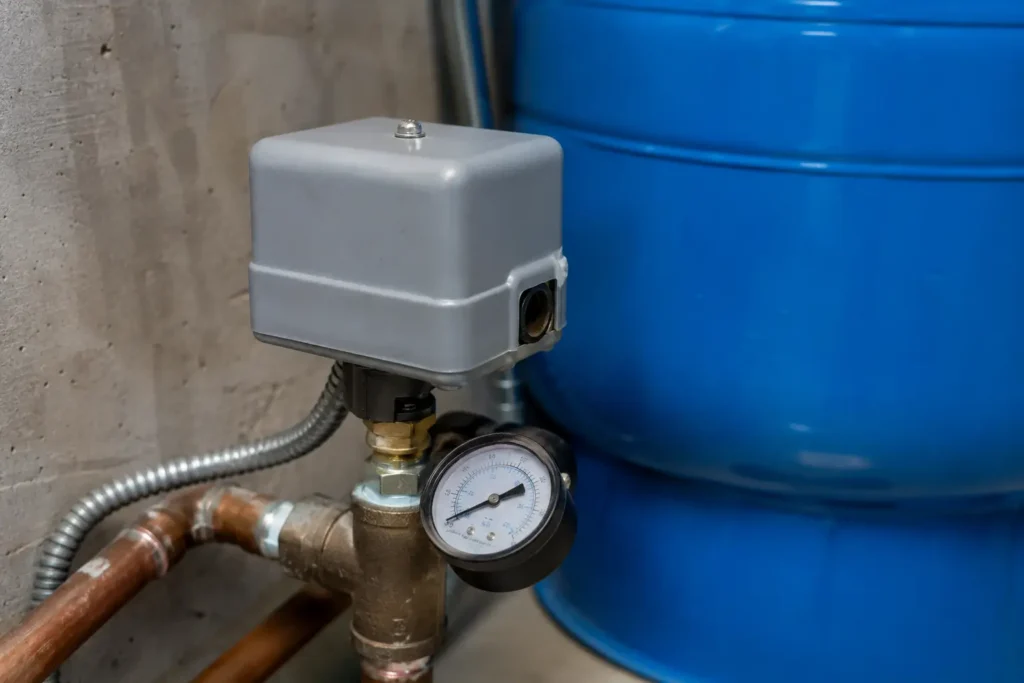
That rapid chatter is the pressure switch for a well pump trying to do its job. Most folks never give this part a second look. It sits on the plumbing, no bigger than a deck of cards, and it decides when your pump runs. When it works, you forget it exists. When it fails, your water goes with it.
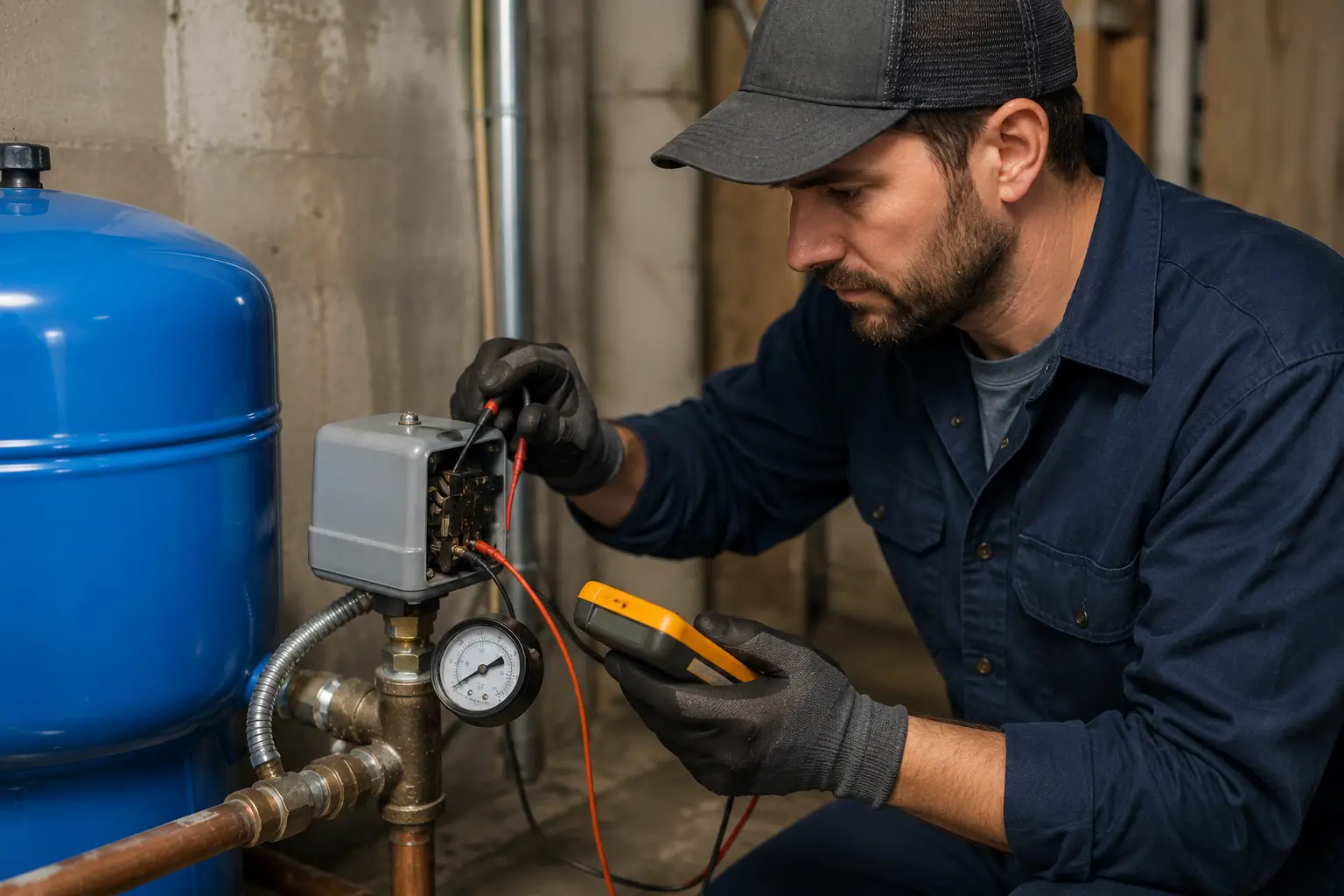
At 5E Pump and Well Service, we’ve spent more than 30 years testing and replacing these switches on wells in the Willamette Valley. It’s one of the smallest but most important parts in your setup, and one of the most common reasons your water starts acting strange. Here’s how to spot a bad one before your pump pays the price.
How a Pressure Switch for a Well Pump Works
Your pump can’t run around the clock. It would burn out fast. So your system keeps water stored under pressure in the tank, and the switch watches that pressure closely.
The simple version is that the switch has a cut-in number and a cut-out number. When pressure drops to the cut-in point, the pump starts. Pressure climbs to the cut-out, and the pump stops. Most homes run 30/50 or 40/60, meaning the pump kicks on at 30 or 40 psi and off at 50 or 60.
Many switches add one more trick, a low-pressure cutoff. If your well runs low or a line breaks, it shuts the pump down before it runs dry and cooks its own motor. A healthy well pump pressure switch keeps that whole process automatic. It also relies on properly maintained well pressure tanks to maintain consistent water pressure throughout your home.
Signs Your Well Pressure Switch Is Failing
A failing pressure switch rarely stays quiet. If you’ve completely lost water or your well system has stopped working, our guide to emergency water well problems explains what to do while you wait for professional service. Learn the tells, and you can catch it before it strands you.
Watch for these:
- The pump won’t shut off. Pressure rises past the cut-out setting, and the pump keeps running. The contacts are stuck closed.
- The pump won’t start—dead silence, even with a good breaker and a low tank. Contacts stuck open or burned.
- Rapid clicking or chattering at the pressure switch at the tank, fast clicking you can hear across the room.
- A burnt, plasticky smell at the switch. That’s scorched contacts, and it’s done.
- Pressure that never builds, with the gauge stuck low no matter how long the pump runs.
Keep in mind that any of these symptoms can also indicate a failing pressure tank or an aging well pump, so it’s important to diagnose the entire system before replacing parts. Before spending money, rule out a failing pump by reviewing the signs that your well pump may be failing.
What Causes a Pressure Switch for a Well Pump to Fail?
Like any mechanical and electrical component, a pressure switch can wear out over time. While many switches last 8–15 years, several factors can shorten their lifespan.
Common causes of failure include:
- Normal wear and tear: Every time your well pump turns on and off, the switch contacts open and close. Over thousands of cycles, those contacts gradually wear down.
- Electrical arcing: Small electrical sparks occur each time the contacts engage. Over time, this can cause pitting or burning that prevents the switch from operating correctly.
- Moisture and corrosion: Well houses, pump rooms, and crawl spaces can expose switches to humidity or water intrusion, leading to corrosion of electrical components.
- Frequent pump cycling: A waterlogged pressure tank or hidden plumbing leak can force the pump to cycle more often than normal, placing extra stress on the pressure switch.
- Incorrect pressure settings: Improper pressure adjustments can cause the pump to run inefficiently and increase wear on both the switch and the overall well system.
Because these symptoms often overlap with pressure tank or pump problems, it’s important to have the entire system professionally evaluated before replacing individual components. Following a regular well pump maintenance checklist can help identify small issues before they lead to pressure switch or pump failure.
Well Pressure Switch Adjustment: Handle With Care
Most switches hide two adjustment nuts under the cover. The tall center nut moves both pressure settings together. The smaller one changes the gap between differential pressure settings.
Now the honest part. Well, pressure switch adjustment is live-electrical work, and most residential pumps run 240 volts. One slip against a metal fitting and you’re headed to the hospital. It’s also easy to set the numbers wrong and quietly stress your pump or tank.
So we don’t hand homeowners a step-by-step for well pressure switch adjustment, and we’d rather you didn’t guess. If you’re experiencing persistent low water pressure in a house with a well, a technician can determine whether the pressure switch, pressure tank, or another component is causing the problem.
Well Pressure Switch Replacement: Repair or Replace?
Consider this common scenario. Your switch starts chattering in March. Water still runs, so you let it slide. By June, the contacts are burned, the pump has fought to stay on for months, and a quick part swap has become a pump you’re paying to pull. Small problem, big invoice.
Catch it early, and the switch is one of the cheapest fixes in the whole system. The part costs less than a tank of gas. We almost always go with a well pressure switch replacement instead of cleaning up an old switch, because a new one is inexpensive and a patched one fails again soon.
A well pressure switch replacement also lets a tech check your tank charge and pump behavior at the same time. If a neglected switch already cooked the pump, though, you may need professional pump installation and repair services to restore your well system.
Frequently Asked Questions About Well Pump Pressure Switches
How long does a well pump pressure switch last?
About a decade, give or take. Hard water, frequent cycling, and a struggling tank can shorten that.
Can I adjust the pressure switch myself?
We don’t recommend it. The switch is live at 240 volts, and wrong settings wear out your pump. Leave adjustments to a pro.
Is it the switch or the tank?
Both can cause rough pressure. A chattering switch or a pump that won’t stop points to the switch. Rapid cycling with a spongy air charge points to the pressure tank.
Why is my well pump pressure switch making a clicking or chattering noise?
A rapid clicking or chattering sound usually indicates that the pressure switch is repeatedly turning the pump on and off in quick succession. This can happen because of worn switch contacts, a failing pressure tank, incorrect pressure settings, or a plumbing leak causing pressure loss. Because several different issues can produce the same symptom, it’s best to have the entire well system professionally inspected before replacing any components.
Don’t Let the Chatter Win
That little gray box does more than its size suggests. Treat the chatter, the burnt smell, or a pump that won’t quit as early warnings, not background noise.
A pressure switch may be one of the smallest components in your well system, but it plays a critical role in protecting your pump and maintaining reliable water pressure. If you’ve noticed rapid clicking, inconsistent pressure, a pump that won’t start or stop, or other signs of trouble, addressing the problem early can help prevent more expensive repairs.
If you’re experiencing persistent water pressure issues or suspect your pressure switch is failing, contact 5E Pump and Well Service. Our experienced technicians will inspect your well pump, pressure tank, and pressure switch to identify the root cause and recommend the right solution.