
Most submersible water pump problems get diagnosed in the first 30 seconds of a phone call. Somebody calls 5E Pump and Well Service from their basement, describes what they’re hearing, and nine times out of ten, we can tell them whether they’re looking at a $40 part or a pulled pump before we ever load the truck.
The trick is knowing what to listen for. Submersible pumps fail in patterns. Once you’ve worked on a few thousand of them across Benton, Linn, Polk, and Lincoln counties, the same handful of problems keep showing up over and over. Some are cheap. Some aren’t. But every one of them sends a signal before it quits completely.
Here’s what those signals usually mean.
Most submersible well pump problems come down to four scenarios. The pump won’t turn on at all. The pump runs, but no water comes up. The pump short-cycles or keeps tripping the breaker. Or there’s a slow decline you’ve been ignoring for months, like creeping pressure loss or sand in the toilet tank.
Each of these submersible well pump problems points to a different failure. Just to reiterate, some are cheap, and some aren’t. Figuring out how to fix submersible pump trouble starts with matching the symptom to the cause before you spend money on the wrong part.
A submersible pump not pumping water panics homeowners more than any other call we take. You can hear the pump running. The breaker hasn’t tripped. But nothing’s coming out of the tap.
Three likely culprits, ranked by what we see most:
This problem plays out across the Willamette Valley every summer. Submersible pump not pumping water is one of the most common July and August calls we get, and nine times out of ten it’s not the pump itself. The pump gets blamed when the well is the actual issue.
For more on the full system, our submersible water pump service page breaks down what we look for on a service call for issues like these. In some cases, the issue may stem from using the wrong type of system for the property. Learn more about the different types of water pumps and how they perform in residential wells.
When your well pump keeps tripping the breaker, it’s the pump’s way of saying something is wrong. Resetting it without diagnosing it can finish off a salvageable motor.
You’re probably wondering if you can just reset and see. Don’t. Not more than once.
Three causes, in rough order of how often we see them:
The honest answer here is that most homeowners can’t distinguish between these without an amp meter and some experience. If your well pump keeps tripping the breaker the second or third time in a week, that’s a pump installation and repair call. DO NOT reset.
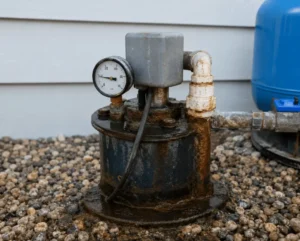
Most pumps give you a warning before they go. Homeowners who catch the early signs of submersible pump failure save a few thousand dollars. The ones who don’t end up with no water on a Sunday night. Most submersible well pump problems telegraph themselves weeks or months in advance if you know where to look.
Watch for:
Any one of these on its own might be nothing. Two or three together, and you’re looking at clear causes of submersible pump failure on the way. We’ve got a fuller breakdown of the warning signs your well pump may be failing if you want to dig deeper.
This can happen due to a low water table, worn pump parts, a failed check valve, or problems inside the well system.
A tripping breaker usually points to electrical issues, motor failure, damaged wiring, or a pump that is overworking.
Common signs include low water pressure, air in the lines, frequent cycling, strange noises, or sediment in the water.
Most submersible well pumps last around 8–15 years, depending on usage, water quality, and maintenance.
Yes. Running dry, clogged components, or continuous operation can cause the pump motor to overheat.
Minor issues can often be repaired, but older pumps or major motor damage may require replacement.
Some submersible pump troubleshooting you can handle from the surface. Checking the breaker, looking at the pressure switch, listening for the click of the relay, and eyeballing the gauge. That stuff is fair game.
Anything below the well cap is a different story. A pump sitting 200 feet down isn’t a YouTube project. The honest answer on how to fix submersible pump trouble at that depth is that you don’t, not without a truck, a rig, and somebody who’s done it enough times not to drop the whole assembly back down the casing.
Truth is, the cost of a wrong DIY guess on submersible pump troubleshooting is usually higher than the service call would have been. Sticking to a regular pump service schedule catches most of these problems before they become emergencies.
If your submersible water pump is showing any of the problems above, don’t wait for it to break. Knowing how to fix submersible pump issues starts with knowing what you’re actually looking at, and the fix at week one is rarely the same fix at week six. Give us a call, and we’ll figure out what’s actually going on, usually the same day. Contact 5E Pump and Well Services Today
If your system is losing pressure, tripping breakers, or struggling to produce water, early diagnosis can prevent the need for a full pump replacement. 5E Pump and Well Service provides professional well pump troubleshooting, repair, and replacement throughout the Willamette Valley and surrounding Oregon communities.
Contact our team today to schedule an inspection or emergency service call.


